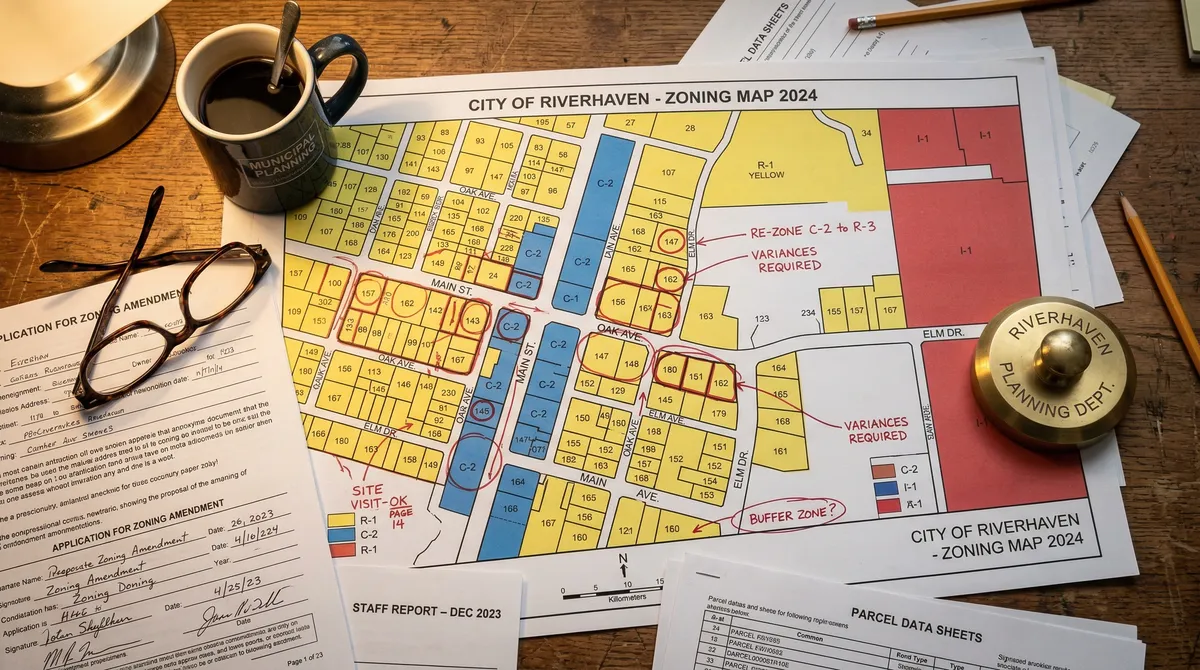
The MBTA Communities Act requires all 177 Massachusetts cities and towns served by or adjacent to the MBTA to allow multifamily housing as-of-right at a minimum density of 15 units per acre. Per the Executive Office of Housing and Livable Communities (EOHLC), 133 communities (75%) have adopted compliant zoning, which has unlocked 5,200 approved housing units with 4,000+ more in planning.
Compliance is well along: 133 of 177 Massachusetts communities (75%) have adopted compliant multifamily zoning under the MBTA Communities Act.
The pipeline is real: the Act has already unlocked 5,200 new housing units, with another 4,000+ in planning.
The legal question is settled: the Massachusetts Supreme Judicial Court confirmed the Act is constitutional.
Enforcement is close: non-compliant communities face loss of state grant funding and possible Attorney General litigation starting January 1, 2026.
Approvals are streamlined: the Act requires as-of-right multifamily development in designated districts, so you skip the discretionary approvals.
As of right means construction and occupancy of multifamily housing is allowed without special permits, variances, zoning amendments, waivers, or other discretionary approvals.
133 of 177 communities now compliant (EOHLC, July 2025), unlocking as-of-right multifamily zoning.
5,200 new housing units already approved as a direct result, with 4,000+ additional units in planning stages (Massachusetts Housing Partnership).
Massachusetts SJC upheld the law as constitutional in Attorney General v. Town of Milton (January 2025).
Five ballot initiatives targeting zoning certified by the Attorney General for 2026, including one that would repeal the law.
The biggest zoning change I have seen in Massachusetts
Governor Charlie Baker signed the MBTA Communities Act into law in 2021. In 35 years of brokering commercial property here, I have not seen a zoning change move the ground under 177 communities the way this one does. If you invest in real estate in this state, you need to understand it, because it rewrites where and how you can build.
What the law requires
The Act requires all 177 cities and towns served by or adjacent to the MBTA to do five things:
1. Designate at least one zoning district where multifamily housing is permitted "as of right"
2. Locate the district within one-half mile of an MBTA transit station (for most communities)
3. Allow minimum density of 15 housing units per acre
4. Remove age restrictions so the housing works for families with children
5. Ensure "reasonable size" of the designated district based on community characteristics
Here is the definition that matters. "As of right" means you can build and occupy multifamily housing without special permits, variances, zoning amendments, waivers, or other discretionary approvals. That takes the biggest source of delay out of the process.
Where compliance stands
As of the July 2025 deadline:
| Status | Communities | Percentage |
|---|---|---|
| Compliant | 133 | 75% |
| Non-Compliant | 15 | 8% |
| Interim Compliant | 29 | 16% |
On the pipeline: 5,200 new housing units have already been approved as a direct result of the law, with 4,000+ more in various planning stages.
The January 2026 enforcement deadline
The regulatory deadline to adopt compliant zoning has already passed. What is still coming is enforcement. The Attorney General deferred litigation against non-compliant communities until January 1, 2026. After that date, a town that has not complied is looking at:
- Loss of eligibility for most competitive state grant funding
- Potential Attorney General litigation to force compliance
- A hit to how the community pitches itself for economic development
The grant programs on the line:
- MassWorks Infrastructure Program
- Housing Choice Initiative grants
- Local Capital Projects Fund
- Community One Stop for Growth programs
For the 15 communities that missed the deadline, the pressure keeps building.
The SJC settled the legal question
On January 8, 2025, the Massachusetts Supreme Judicial Court issued its opinion in Attorney General v. Town of Milton and ruled that the MBTA Communities Act is constitutional. That decision:
- Removes the legal uncertainty that had some communities dragging their feet
- Confirms the state can tie zoning mandates to state funding
- Sets precedent for future housing-related zoning reforms
For an investor, that means the compliant zoning is going to hold, and approvals you get under the law rest on solid ground.
What this means for investment
The Act splits the map into two kinds of markets, each with its own play.
Compliant communities (133 towns):
What works in your favor:
- As-of-right approvals cut entitlement risk
- No special permit hearings means faster timelines
- A predictable process brings in institutional capital
- There is a first-mover edge for developers who move now
My read: assemble sites inside the designated MBTA districts. Go after communities with strong demographics, good schools, and real transit access. And move, because the best sites get bought first.
Non-compliant communities (15 towns):
The headwinds:
- The old discretionary approval process is still in place
- Lost state funding can hurt infrastructure and municipal services
- Nobody knows exactly when these towns will comply
Where there may be an opening: some of these towns have softer land pricing precisely because of the uncertainty. If you are patient and you expect the town to comply eventually, there can be value in acquiring sites now.
The Complete Neighborhoods Partnership
The Massachusetts Housing Partnership (MHP) started the Complete Neighborhoods Partnership to help communities implement the Act. What it offers:
- Up to $150,000 per community in technical assistance
- Capital investment subsidies for affordable housing near transit
- Multi-year support for planning and implementation
- Priority funding for 12 selected communities
If you partner with a community getting Complete Neighborhoods support, you can tap additional funding sources and move approvals faster.
The 2026 ballot risk
Keep an eye on the ballot. Of the 40 provisions the Attorney General certified for the 2026 ballot, five deal directly with zoning, and four of those aim to roll back what the MBTA Communities Act has done. One would repeal the law outright.
Polling points to strong public support for building more housing, but no ballot outcome is a sure thing. So:
- Watch how the ballot questions develop
- Think through what the timeline means for your projects
- Structure deals so you can absorb a regulatory change if it comes
How to work the site selection
Site selection criteria:
1. Confirm the community's compliance status at mass.gov/mbta-communities
2. Verify the site falls within a designated multifamily district
3. Review the district's dimensional requirements (setbacks, height, parking)
4. Assess transit access and walk score
5. Analyze local demographics and rental market fundamentals
Due diligence checklist:
- Get a copy of the adopted zoning bylaw or ordinance
- Confirm the EOHLC compliance determination letter
- Review the site plan approval requirements (ministerial vs. discretionary)
- Identify any overlay districts or extra requirements
- Check infrastructure capacity (water, sewer, roads)
My take
This law changed the development map in Massachusetts, full stop. The towns that got on board are seeing new investment. The ones fighting it are staring at more pressure and lost funding.
For multifamily investors, compliant MBTA communities give you:
- Less entitlement risk
- Faster timelines
- Strong demographic fundamentals
- Growing state support for transit-oriented development
The January 2026 deadline will squeeze the holdouts harder. I expect more towns to come into compliance in 2026, which widens the set of places worth looking at.
Lornell Real Estate tracks zoning compliance across Central Massachusetts. Contact us for guidance on specific communities and available development sites.
Limitations: Regulatory information reflects statutes and rules in effect at publication. Legislation, enforcement deadlines, zoning ordinances, and municipal requirements change through legislative action, court decisions, and administrative rulemaking. Compliance obligations vary by municipality and property type. This article does not constitute legal advice. Consult a qualified attorney for guidance on specific regulatory compliance requirements.
Sources & References
- Executive Office of Housing and Livable Communities
- January 2025
- MBTA
This article cites data from the sources listed above. For the most current figures, consult the original publications directly.
Data current as of publication date. Market conditions, rates, and regulations may have changed. Consult a qualified commercial real estate professional before making investment decisions.
Get the full Central MA market data
Commercial tax-base growth, development activity, and demographics across Central MA, town by town.