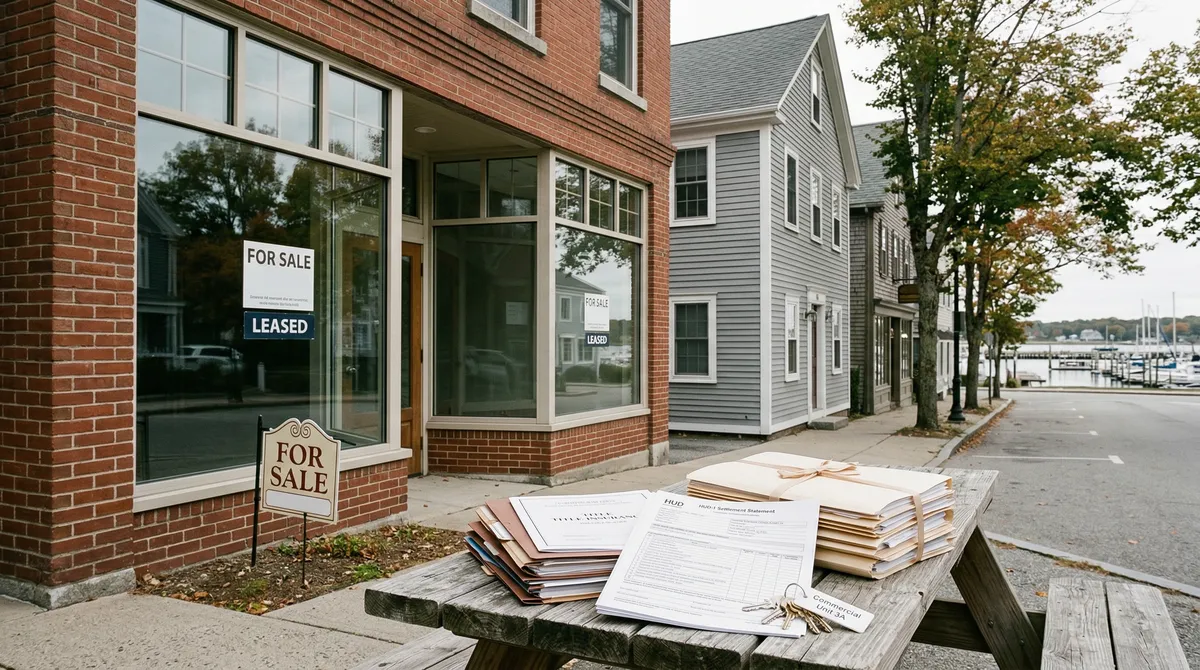
Closing costs on a commercial deal are more varied, more negotiable, and usually bigger than people expect walking in. On a $1.5 million industrial property in Worcester County, which is a common deal size around here, total closing costs run $30,000-$75,000 for the buyer and $60,000-$120,000 for the seller. Knowing what is coming, and what you can actually push on, is what keeps a closing from stalling or falling apart.
Buyer closing costs: Typically 2-5% of purchase price, covering due diligence, title, legal, financing, and recording fees.
Seller closing costs: Typically 4-8% of purchase price, dominated by brokerage commissions (4-6%), transfer taxes, and legal fees.
Massachusetts transfer tax: $4.56 per $1,000 of sale price (deed stamps), paid by the seller. That is $6,840 on a $1.5M transaction.
Negotiable items: Brokerage commission splits, who carries the title insurance premium, and proration dates are all on the table between the parties.
Prorations are the division of ongoing property expenses (property taxes, insurance, rents, CAM charges) between buyer and seller based on the closing date. In Massachusetts commercial transactions, prorations are typically calculated "as of" the closing date, with the seller responsible through the day before closing and the buyer responsible from closing day forward.
2-5% of purchase price is the typical range for buyer closing costs on a commercial transaction in Massachusetts.
4-8% of sale price is the typical range for seller closing costs, including brokerage commissions.
$4.56 per $1,000 is the Massachusetts deed excise tax (transfer stamp) rate, paid by the seller at closing.
60-90 days is the typical timeline from executed purchase and sale agreement to closing for a commercial property.
What the buyer pays, line by line
Due diligence
You spend this money before closing, and once the due diligence period runs out you generally do not get it back:
| Cost Item | Typical Range | Notes |
|---|---|---|
| Phase I Environmental Assessment | $2,500-$5,000 | Required by all commercial lenders; examines environmental contamination risk |
| Phase II Environmental Assessment | $10,000-$50,000 | Only if Phase I identifies recognized environmental conditions (RECs) |
| Property appraisal | $3,000-$8,000 | Required for financing; MAI-certified appraiser for commercial properties |
| Building inspection | $1,500-$4,000 | Structural, mechanical, electrical, plumbing, roof condition |
| ALTA/NSPS survey | $3,000-$8,000 | Required by lenders; shows boundaries, easements, encroachments, flood zones |
| Zoning compliance review | $500-$2,000 | Confirms current use is legally conforming; critical for older Worcester buildings |
| Title search and examination | $1,000-$2,500 | Reviews deed history, liens, encumbrances, easements |
Total due diligence: $12,000-$30,000 (without Phase II)
On Worcester County commercial property, the Phase I matters more than most buyers realize, because of the region's manufacturing history. A lot of industrial and mixed-use buildings near the old mill sites along the Blackstone River corridor or in Southbridge's industrial district carry environmental history that touches both financing and insurance.
Financing
| Cost Item | Typical Range | Notes |
|---|---|---|
| Loan origination fee | 0.5-1.5% of loan amount | Negotiable; higher for bridge/hard money loans |
| Mortgage recording fee | $0-$50 + tax | Massachusetts charges no separate mortgage tax, but recording fees apply |
| SBA guarantee fee | 0.25-3.75% of guaranteed portion | For SBA 504 or 7(a) loans; varies by loan size |
| Rate lock fee | 0-0.5% of loan amount | For fixed-rate commercial mortgages with extended closing timelines |
| Lender legal fees | $3,000-$10,000 | Buyer pays the lender's attorney to review and close the loan |
Total financing costs: $8,000-$40,000 on a $1M loan (varies significantly by loan type)
Title and insurance
| Cost Item | Typical Range | Notes |
|---|---|---|
| Owner's title insurance | $2,500-$6,000 | One-time premium based on purchase price; protects buyer against title defects |
| Lender's title insurance | $1,500-$3,500 | Required by lender; protects lender's lien position |
| Title endorsements | $200-$1,000 | Zoning, environmental, survey, access endorsements |
| First-year property insurance | $3,000-$15,000 | Commercial property and liability; due at or before closing |
Legal and recording
| Cost Item | Typical Range | Notes |
|---|---|---|
| Buyer's attorney | $5,000-$15,000 | Commercial real estate attorney for P&S review, due diligence, closing |
| Recording fees | $200-$500 | Worcester County Registry of Deeds; deed, mortgage, and discharge recording |
| Entity formation (if applicable) | $500-$2,000 | LLC or trust formation for holding the property |
Buyer costs, added up
On a $1.5 million commercial property in Worcester County with conventional financing:
| Category | Estimated Range |
|---|---|
| Due diligence | $12,000-$30,000 |
| Financing | $8,000-$25,000 |
| Title and insurance | $7,000-$25,000 |
| Legal and recording | $5,500-$17,500 |
| Total buyer closing costs | $32,500-$97,500 (2.2-6.5%) |
That range is wide because deals are not the same. Buy a single-tenant industrial building with a clean environmental history and you land near the bottom. Buy a multi-tenant retail center that needs Phase II work, an SBA loan, and a layered entity structure and you head for the top.
What the seller pays, line by line
Brokerage commissions
| Scenario | Typical Rate | On $1.5M Sale |
|---|---|---|
| Seller's broker + buyer's broker | 4-6% total (split) | $60,000-$90,000 |
| Seller's broker only (unrepresented buyer) | 3-4% | $45,000-$60,000 |
| Dual agency (same broker represents both) | 4-5% | $60,000-$75,000 |
Commissions are the biggest number on the seller's side, and they are always negotiable. In Central Massachusetts, 5-6% is the standard range for commercial deals under $5 million, and the percentage tends to come down on larger deals. The split between the listing and buyer's brokers is usually even.
Transfer taxes (Massachusetts deed excise tax)
Massachusetts puts a deed excise tax, what most people call "stamps," on real property transfers:
- Rate: $4.56 per $1,000 of sale price
- On a $1.5M sale: $6,840
- Paid by: Seller (by convention and statute)
- Exemptions: Transfers between family members, transfers to/from trusts where the grantor is the beneficiary, and certain foreclosure-related transfers
Unlike a residential deal, there is no add-on county or municipal transfer tax in Massachusetts. The $4.56/$1,000 rate is the same across the state.
Other seller costs
| Cost Item | Typical Range | Notes |
|---|---|---|
| Seller's attorney | $3,000-$10,000 | Deed preparation, P&S negotiation, closing representation |
| Mortgage discharge/payoff | $50-$500 | Recording fee for discharge; prepayment penalties may apply separately |
| Prepayment penalty (if applicable) | 1-5% of loan balance | Common on fixed-rate commercial mortgages; check your loan docs |
| Outstanding liens/judgments | Varies | Must be cleared at or before closing |
| Prorations (seller's share) | Varies | Property taxes, CAM contributions, utility adjustments |
| Municipal lien certificate | $25-$150 | Required in Massachusetts to confirm no outstanding municipal charges |
| Smoke/CO detector compliance | $200-$500 | Massachusetts requires certification for property transfers |
Seller costs, added up
On a $1.5 million commercial property sale in Worcester County:
| Category | Estimated Range |
|---|---|
| Brokerage commissions (5%) | $75,000 |
| Massachusetts deed excise tax | $6,840 |
| Attorney fees | $3,000-$10,000 |
| Recording and administrative | $275-$1,150 |
| Prorations and adjustments | Varies |
| Total seller closing costs | $85,000-$92,000 (5.7-6.1%) |
A prepayment penalty on the existing mortgage can push that number a good deal higher.
How the timeline runs
A typical commercial closing in Massachusetts moves in this order:
| Phase | Timeline | Key Activities |
|---|---|---|
| Letter of Intent (LOI) | Week 1-2 | Price, terms, contingencies negotiated |
| Purchase & Sale Agreement | Week 2-4 | Attorney-drafted P&S executed with deposit (typically 5-10%) |
| Due diligence period | Week 4-8 | Inspections, environmental, survey, title, zoning review |
| Financing contingency | Week 4-10 | Appraisal, underwriting, loan commitment |
| Title clearing | Week 8-12 | Resolve any title defects, obtain payoff statements |
| Closing | Week 10-14 | Deed transfer, funds disbursement, recording |
Escrow: In Massachusetts commercial deals, the buyer's deposit sits in escrow with the seller's attorney or a title company, and it gets applied to the purchase price at closing. If the buyer walks after the contingencies expire, the seller may be entitled to keep the deposit as liquidated damages.
What you can actually negotiate
Plenty of costs that look fixed are not:
- Title insurance: The buyer can shop providers and negotiate the premium.
- Who pays for the survey: Convention varies. In Central Massachusetts the buyer usually pays, but I have seen sellers cover it to move a closing along faster.
- Proration date: The standard is "as of closing," but the parties can agree to a different date.
- Commission structure: Sellers negotiate the rate before listing; buyers can negotiate a commission credit from their broker toward closing costs.
- Deposit amount: 5-10% is typical, but the deposit amount and the release conditions are both negotiable.
- Closing cost credits: Sellers sometimes offer a credit, which lowers the effective sale price, to get a marginal deal over the line.
"Every commercial transaction has a negotiation within the negotiation. The purchase price gets the headlines, but the real economics are in the closing cost allocation, proration structure, and commission terms.
Sources & References
- Massachusetts General Laws Chapter 64D (Deed Excise Tax)
- Worcester County Registry of Deeds fee schedule
- Massachusetts Association of Realtors closing cost guidelines
- Lornell Real Estate transaction data (2023-2026)
Data current as of publication date. Closing costs, tax rates, and fee schedules are subject to change. Specific transaction costs depend on deal size, property type, financing structure, and negotiated terms. Consult a qualified commercial real estate attorney and accountant for transaction-specific guidance.
Planning a commercial property acquisition or sale in Central Massachusetts? Contact Lornell Real Estate at (774) 745-0015 or [email protected] for a detailed closing cost estimate based on your specific transaction. Selling? Request a free property valuation and we'll include a full net-proceeds breakdown with your closing cost estimate.
Related seller guides: Complete Guide to Selling Commercial Property in MA | Broker Fees Explained | What Is My Commercial Property Worth?
Limitations: Closing cost ranges cited are estimates based on typical Central Massachusetts commercial transactions and may not reflect your specific deal. Actual costs depend on property type, purchase price, financing structure, environmental conditions, title complexity, and negotiated terms. Massachusetts deed excise tax rates and recording fees are subject to legislative change. This article does not constitute legal, tax, or financial advice. Consult qualified professionals for transaction-specific guidance.
Get the full Central MA market data
Commercial tax-base growth, development activity, and demographics across Central MA, town by town.