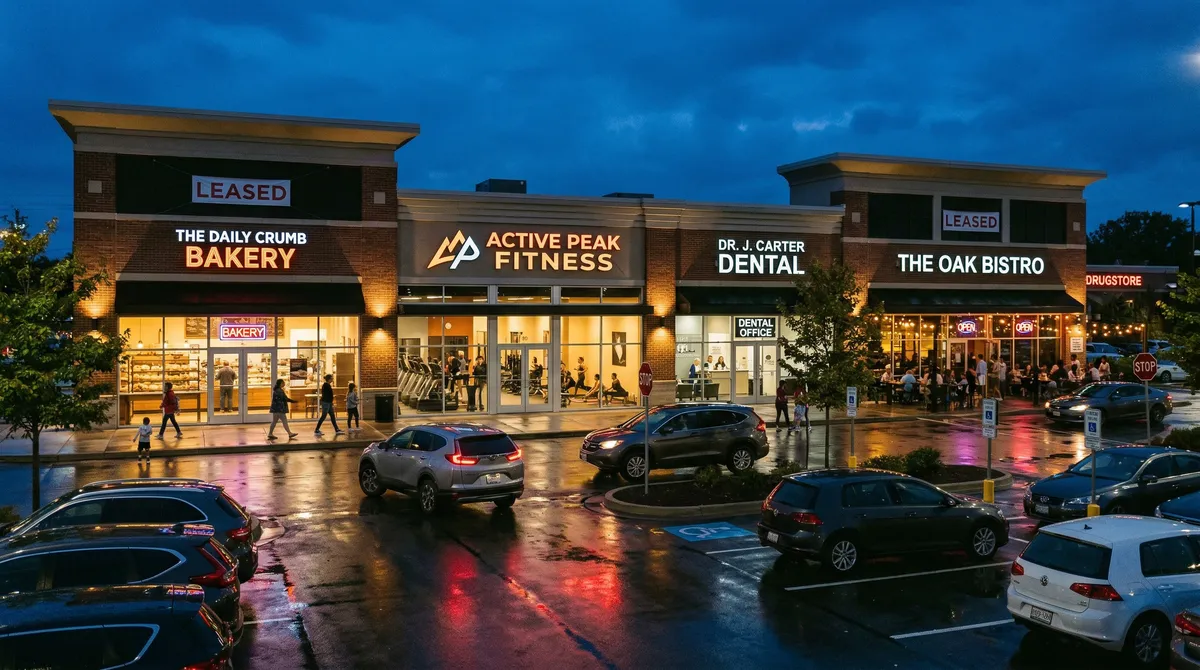
Massachusetts retail vacancy has fallen to 2.2%, the lowest in over 20 years, per CoStar Group. Nationally it's 4.3% (CoStar, Q2 2025), near 20-year lows. The "retail apocalypse" everyone was writing obituaries for in 2017-2020 never showed up. What actually happened: new construction dropped 43% and 130 million square feet of dead space got knocked down.
Massachusetts Market: Retail vacancy in Massachusetts is at a 20-year low of 2.2%, well under the 4.3% national average.
Supply Constraints: New retail construction fell 43% from 2023 to 2024, and 130 million square feet of obsolete space came down. Not enough space, steady demand.
Growth Outlook: Global in-store sales are projected to rise from $24.2 trillion in 2024 to $28.3 trillion by 2030. Physical stores aren't going anywhere.
Investment Strategy: Put money into neighborhood grocery-anchored centers and necessity retail. Those are the formats holding up.
Retailer Adaption: The big retailers now use their stores for online fulfillment, brand presence, and cheap returns. That's what's behind the brick-and-mortar turnaround.
Omnichannel fulfillment is a retail strategy that integrates online and physical store operations to give customers a consistent experience, using the stores for things like order pickups and returns.
Massachusetts retail vacancy at just 2.2% (CoStar Group), the lowest in over 20 years.
43% decline in new retail construction from 2023 to 2024, 52.3M SF down to 30M SF (CoStar), with 130M SF of obsolete space demolished.
Global in-store sales projected to reach $28.3 trillion by 2030 (Statista), up from $24.2 trillion in 2024.
Neighborhood grocery-anchored centers and necessity retail are the formats doing the best for investors.
Why physical stores are full again
Remember the "retail apocalypse"? From 2017 to 2020 the headlines had e-commerce killing off brick-and-mortar for good. It didn't happen.
What the numbers say
Global In-Store Sales:
- 2024: $24.2 trillion
- 2030 (projected): $28.3 trillion
U.S. Daily Brick-and-Mortar Revenue: $16.2 billion (Q1 2025 average)
Massachusetts Retail Vacancy: 2.2% (20-year low)
National Retail Vacancy: 4.3% (Q2 2025)
What's behind it
1. Supply collapsed while demand held
The biggest reason retail is tight is straightforward. Nobody's building, and people kept shopping.
| Year | Retail Space Delivered |
|---|---|
| 2023 | 52.3 million SF |
| 2024 | 30.0 million SF |
That 43% drop in new construction comes down to a few things:
- Construction costs got too high to pencil out new development
- Interest rates pushed financing costs up
- Zoning in a lot of towns won't allow new retail anyway
- Developers went chasing industrial and multifamily instead
At the same time, 130 million square feet of obsolete retail space has been demolished over the past few years. That pulls old, unleaseable inventory off the board.
2. Retailers came back to the store
The big chains figured out physical stores aren't optional:
- Omnichannel fulfillment: Stores double as distribution points for online orders (BOPIS, ship-from-store)
- Brand experience: A storefront builds awareness and keeps customers coming back
- Returns processing: Handling a return in-store costs a lot less than mail
- Customer acquisition: A physical store brings customers in cheaper than digital-only does
Plenty of online-only brands that swore they'd never sign a lease are now opening stores as fast as they can.
3. Remote work helped, which nobody saw coming
Working from home turned out to be good for neighborhood retail. With more people home during the day:
- Local spending went up in the suburbs
- Daytime foot traffic moved out of downtowns and into residential areas
- Neighborhood centers became the spot where people run into each other
Winners and losers
Retail isn't one thing. The gap between the good stuff and the bad stuff is wide right now:
Winning Formats:
| Format | Why It's Working |
|---|---|
| Neighborhood Centers | Essential retail, convenience, local spending |
| Grocery-Anchored | Non-discretionary traffic driver |
| Experiential Retail | Fitness, dining, entertainment |
| Necessity Retail | Dollar stores, pharmacies, QSR |
| Medical Retail | Growing healthcare demand |
Challenged Formats:
| Format | Challenges |
|---|---|
| Enclosed Malls | Traffic decline, anchor store struggles |
| Big Box (Secondary) | E-commerce competition |
| Apparel-Focused | Consumer shift to experiences |
Why Massachusetts holds up
A few things work in this state's favor:
Demographics: Household incomes here run higher ($89,000 median vs. $75,000 national), which means more money spent at retail.
Education: College towns give you a steady, educated customer base.
Tourism: Boston's tourist traffic keeps urban retail busy.
Density: More people per square mile means neighborhood retail actually pencils out.
How I'd invest in 2026
With vacancy this low and so little new space coming, here's where I'd put money:
1. Neighborhood grocery-anchored centers
What you get:
- Anchor tenants locked into long-term leases
- Essential retail that shrugs off e-commerce
- Enough traffic to fill the small shops
- Cash flow you can count on
Target cap rates: 6.5-7.5% depending on the anchor's credit and the location
2. Necessity-based retail
Stick with tenants selling what people actually need:
- Dollar stores (Dollar General, Dollar Tree)
- Pharmacy/drug stores (CVS, Walgreens)
- Quick-service restaurants
- Auto service
- Medical/dental offices
3. Value-add plays
Since almost nothing new is getting built, fixing up a tired center can add real value:
- Reworking the tenant mix toward experiential uses
- Adding outparcels for quick-service restaurants
- Cleaning up the common areas and facades
- Fixing the parking and access
What to keep an eye on
Store Closures: Even with the market strong, some chains are still in trouble. Macy's and Kohl's have announced Massachusetts store closures. Stress-test your tenant concentration before you underwrite.
2026 Vacancy Forecast: CoStar sees vacancy ticking up through mid-2026, topping out under 4.4% nationally. Net absorption is projected to average 3.8 million SF a quarter, below the 5-year average of 9.8 million SF.
Interest Rate Sensitivity: Retail cap rates are still high by historical standards because financing costs more. If rates come down further, expect some compression.
Where this leaves us
The sector everyone was ready to bury has the best fundamentals I've seen in decades. Supply dried up, retailers figured out omnichannel, and shopping patterns shifted. All of it lined up in retail's favor.
For investors who stick to good locations and essential tenants, the returns hold up well against the risk, especially here in Massachusetts where vacancy is at a historic low.
Lornell Real Estate represents retail properties across Central Massachusetts. Contact us to discuss available opportunities in this sector.
Limitations: Market data, projections, and trend analyses reflect conditions at publication. Commercial real estate markets are inherently cyclical, and submarket and property-level performance can diverge significantly from the regional averages cited. Demographic data, employer information, and regulatory conditions are subject to change. This article does not constitute investment advice. Conduct property-specific due diligence and consult qualified professionals before making investment decisions.
Sources & References
- CoStar
- CoStar Group
- CoStar, Q2 2025
- Statista
This article cites data from the sources listed above. For the most current figures, consult the original publications directly.
Data current as of publication date. Market conditions, rates, and regulations may have changed. Consult a qualified commercial real estate professional before making investment decisions.
Get the full Central MA market data
Commercial tax-base growth, development activity, and demographics across Central MA, town by town.