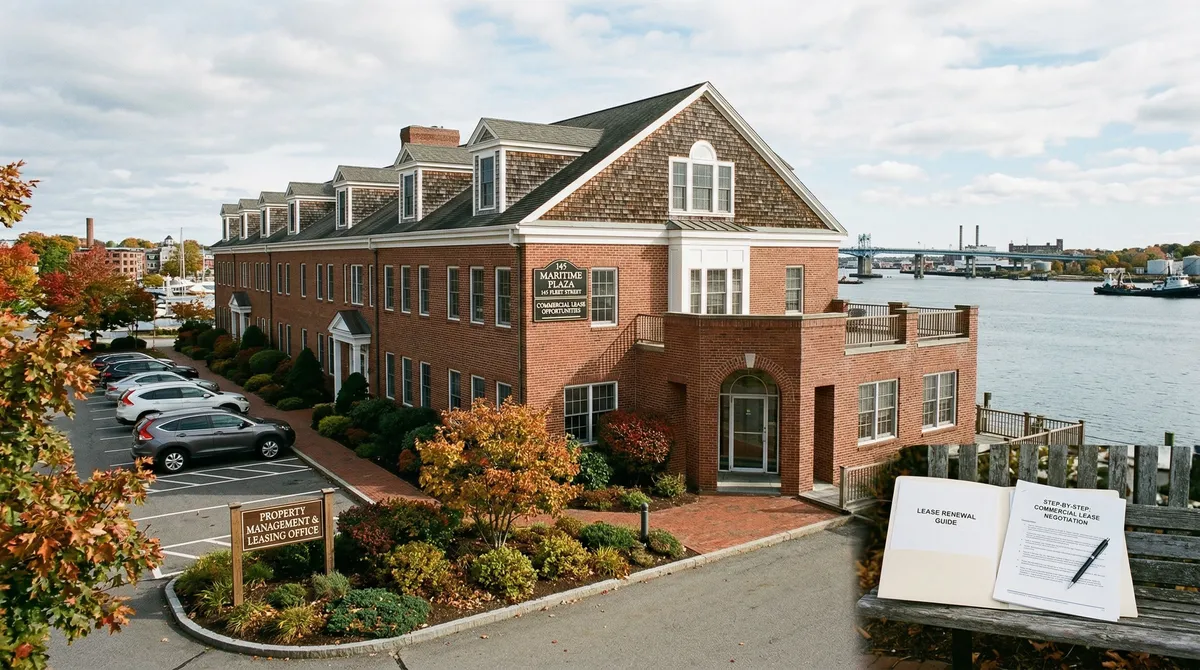
A commercial lease renewal is not a formality. It is a negotiation, and for a lot of businesses it is the single largest financial decision they make in a given year. Renew passively versus negotiate it, and the difference can run tens of thousands of dollars over a five-year term. In Central Massachusetts, where industrial vacancy sits at 4-6% and retail rates run $8 to $18 per square foot NNN, you need to understand what you are walking into.
Start early: Begin renewal negotiations 12-18 months before your lease expires to maximize leverage and avoid holdover penalties.
Know your market: Worcester County industrial rents have climbed 15-20% since 2020; retail rates vary from $8-$18/SF NNN depending on location and traffic counts.
Everything is negotiable: Rent, tenant improvements, term length, options, exclusivity clauses, and CAM caps are all on the table during renewal discussions.
Walking away is power: Having a viable relocation alternative is the single most effective negotiation tool a tenant possesses.
Holdover Clause is a lease provision that specifies the rental rate and terms if a tenant remains in the space after lease expiration without executing a renewal. Most holdover clauses impose a 150-200% rent premium on a month-to-month basis, making late renewal negotiations extremely costly.
12-18 months is the ideal window to begin renewal negotiations, giving tenants time for market analysis, space tours, and competitive leverage.
15-25% is the typical gap between a landlord's initial renewal proposal and the final negotiated rate in Central Massachusetts.
$5-$15/SF in tenant improvement allowances are commonly negotiated during renewals for spaces requiring updates.
3-5 year renewal terms are standard in Worcester County, though 7-10 year terms with fixed escalations offer the strongest rent protection.
Step 1: Start the clock at 12-18 months out
The biggest mistake I see tenants make is waiting until 3-6 months before expiration to start renewal talks. By then the landlord knows you are boxed in, and your leverage is gone.
Here is why the timing matters:
- Market research takes 4-6 weeks to do properly
- Space tours of alternative locations take 2-4 weeks
- Lease negotiations typically run 4-8 weeks
- Build-out and move-in for a new space can require 3-6 months
- Your current landlord knows every one of these timelines cold
Start at 12-18 months and you actually have options. In Worcester County, industrial spaces under 6,000 SF move in days, and retail storefronts on Route 9 rarely sit vacant. That lead time isn't a nicety here. You need it.
Step 2: Do your market analysis before you respond
Never answer a landlord's renewal proposal without your own market data. The landlord has the numbers. You should too.
Here is what to pull together:
| Metric | Where to Find It | Why It Matters |
|---|---|---|
| Comparable lease rates | Broker, CoStar, LoopNet | Establishes fair market rent |
| Vacancy rate for your submarket | Broker market report | Low vacancy = landlord leverage; high vacancy = tenant leverage |
| Recent renewals in the building | Building management, broker contacts | Shows actual (not asking) renewal rates |
| Tenant improvement allowances | Comparable lease comps | Establishes what landlords are offering to attract tenants |
| Traffic counts / demographics | MassDOT, census data | Validates location value for retail tenants |
In today's Worcester market, industrial lease rates run $6-$12/SF NNN with vacancy at 4-6%. Retail along Route 9 in Spencer runs $10-$14/SF NNN with roughly 16,000 ADT. Office in downtown Worcester runs $14-$22/SF modified gross. Those numbers are your anchor.
Step 3: Know the tactics landlords use
Landlords and their brokers run the same plays over and over on renewals. Once you see them coming, they stop working.
The early-bird offer: A landlord sends a "special renewal rate" 18+ months early, hoping you sign before you check the market. That rate almost always sits above fair market value.
The market-rate anchor: The landlord quotes asking rents off the highest-priced comparable, not the one that actually fits your space. Counter with real lease comps, not listing prices.
The TI trade-off: "We can lower the rent if you skip tenant improvements." Run the math. A $2/SF rent cut over five years on 3,000 SF saves $30,000. If the space needs $40,000 in improvements, the trade doesn't pencil.
The short-term squeeze: A 1-2 year renewal offered at a steep premium. That is set up so the landlord can reset the rate on you frequently. Push for 3-5 year terms with the escalations spelled out up front.
Step 4: Know what is actually on the table
Tenants tend to fixate on base rent. If you have done this a while, you work the whole economic picture:
Base Rent
- Target: 5-10% below the landlord's initial proposal (market-dependent)
- Structure: Fixed annual escalations of 2-3% are preferable to CPI-based adjustments, which have been volatile
Tenant Improvements (TI)
- Renewal TI allowances of $5-$15/SF are common in Worcester County
- Negotiate TI as a dollar amount, not a rent credit. That keeps your cash flow intact.
- Amortization: if the landlord amortizes TI into rent, negotiate the interest rate (target 6-7%, reject anything above 8%)
Term Length
- Longer terms (5-7 years) usually get you a lower per-SF rate
- Build in a termination option at year 3 or 4 with a defined penalty (usually 3-6 months' rent) so you keep some flexibility
Operating Expense Caps
- For NNN leases, negotiate a CAM (Common Area Maintenance) cap of 3-5% annual increases
- Ask for the right to audit operating expense reconciliations annually
Exclusive Use and Restrictive Covenants
- Retail tenants: make sure your exclusive use clause carries through the renewal
- Confirm the landlord cannot lease adjacent space to a direct competitor
Options to Renew
- Lock in one or two additional renewal options at predetermined rates or fair-market-value formulas
- Options with a "greater of" clause (greater of current rate or FMV) protect both parties
Step 5: Build your best alternative
The most powerful thing you can bring to a renewal is a credible alternative. Before your second sit-down with the landlord, do this:
- Tour 2-3 alternative spaces that genuinely fit how you operate
- Get proposals or LOIs from competing landlords
- Add up total relocation costs (moving, downtime, build-out, signage, address changes)
- Use the alternatives strategically. You don't need to bluff. Just saying you are "evaluating options" changes the conversation.
In Worcester County, tenants who move from one submarket to another often find the cost difference is real. A retail tenant on Route 9 in Spencer paying $12/SF NNN might find comparable space in Leicester at $9/SF NNN with similar traffic on the same corridor.
Step 6: Know when to walk
Walking away is the right call when:
- The renewal rate sits more than 10% above market and the landlord won't move
- The space no longer fits how you operate (size, layout, loading, parking)
- The building has deferred maintenance or code problems the landlord won't fix
- Your business has changed and a different type of location would serve you better
- Relocation costs come in under the premium you'd pay across the renewal term
"We tell every tenant the same thing: loyalty to a location is understandable, but loyalty that costs you 20% above market every year for five years is a business decision you should not make without the numbers in front of you.
What is different about renewals in Worcester County
The Central Massachusetts commercial market has its own quirks that shape how a renewal goes:
- Industrial space is tight: More than 18 million SF of inventory, but only 4-6% vacancy, so industrial landlords hold the cards. Start your renewal at 18 months, not 12.
- Retail lives and dies by the corridor: Route 9 and Route 20 properties command premium rents on traffic counts above 15,000 ADT. Off-corridor alternatives can save you 20-30%.
- Office is softening: Since the pandemic, Worcester County office vacancy has risen, which hands office tenants real leverage on both rent and TI.
- Watch the property tax pass-throughs: Worcester's commercial tax rate of $28.61 per $1,000 of assessed value is among the highest in the state. On an NNN lease, nail down how reassessments get handled at renewal.
Sources & References
- Lornell Real Estate internal market data
- MassDOT traffic count database
- Worcester Assessor's Office
- CoStar Group market analytics
Data current as of publication date. Lease rates, vacancy figures, and market conditions change continuously. Consult a qualified commercial real estate broker before making leasing decisions.
Ready to negotiate your next commercial lease renewal? Contact Lornell Real Estate at (774) 745-0015 or [email protected] for a confidential market analysis and renewal strategy tailored to your space.
Limitations: Lease rates, vacancy figures, and market benchmarks cited reflect Central Massachusetts conditions at time of publication. Individual negotiation outcomes depend on property-specific factors including building condition, tenant creditworthiness, remaining lease term, and local submarket dynamics. This article provides general guidance and does not constitute legal or financial advice. Engage a commercial real estate broker and attorney before executing any lease renewal.
Get the full Central MA market data
Commercial tax-base growth, development activity, and demographics across Central MA, town by town.