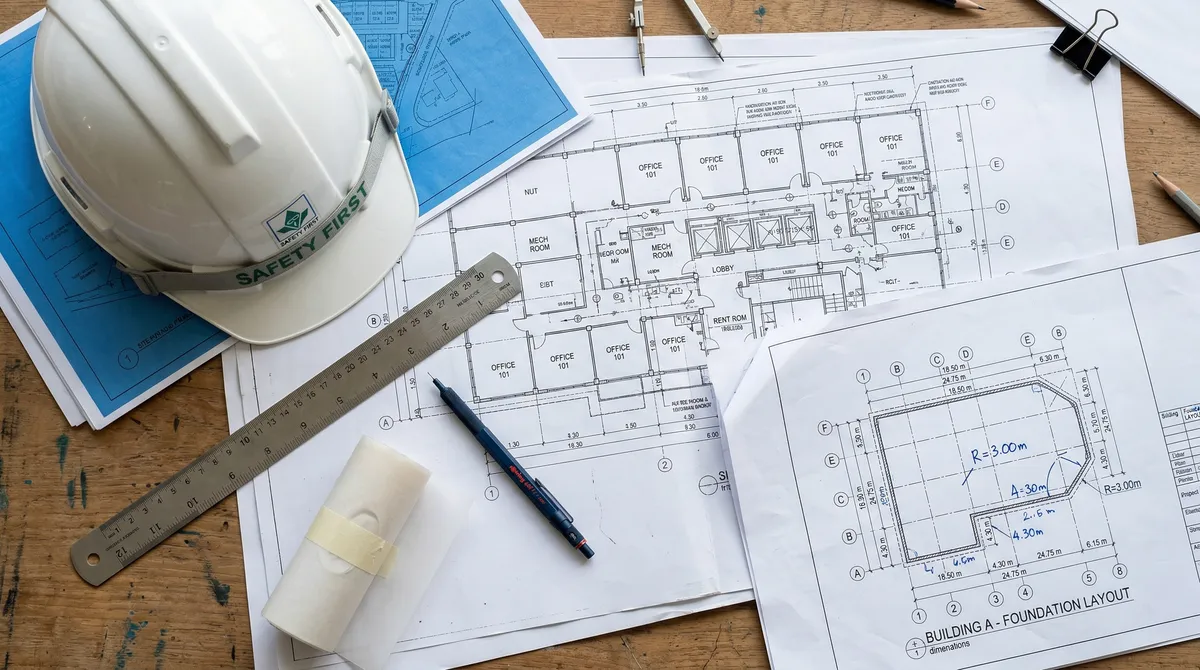
Build-to-suit development offers the best risk-adjusted returns in commercial real estate because the tenant is committed before construction begins, eliminating speculative lease-up risk. According to CBRE, BTS projects typically deliver 12-18% development margins with immediate stabilization, compared to 18-36 months of lease-up uncertainty for speculative developments.
- Superior Returns: Build-to-suit (BTS) projects typically deliver 12-18% development margins with immediate stabilization, offering superior risk-adjusted returns compared to speculative developments.
- Long-term Stability: BTS tenants commonly sign initial lease terms of 10-20 years, providing developers with reliable long-term income security and reduced vacancy risk.
- Lower Financing Costs: Pre-committed tenants and straightforward approvals can reduce financing costs by 50-100 basis points, capitalizing on lower perceived project risk.
- Enhanced Market Value: Credit-tenant BTS properties often achieve 50-100 basis points tighter cap rates upon sale compared to similar multi-tenant assets, reflecting their premium market value.
Build-to-suit (BTS) development is a commercial real estate strategy where a building is custom-built for a pre-committed tenant, eliminating speculative lease-up risk by securing occupancy before construction begins.
Development margin: 12-18% for BTS vs. 20-30% for speculative, but with zero lease-up risk (CBRE)
Lease terms: BTS tenants typically sign 10-20 year initial terms, providing long-term income security (Cushman & Wakefield)
Cost savings: As-of-right approvals and pre-committed tenants reduce financing costs by 50-100 bps (Mortgage Bankers Association)
Exit premium: Credit-tenant BTS properties sell at 50-100 bps tighter cap rates than comparable multi-tenant assets (CoStar Group)
Why Build-to-Suit?
Build-to-suit (BTS) development constructing a building specifically for a pre-committed tenant offers the best risk-return profile in commercial real estate development. The tenant is secured before ground is broken, eliminating the speculative lease-up period.
The Risk-Return Comparison
| Development Type | Lease-Up Risk | Development Margin | Time to Stabilization |
|---|---|---|---|
| Speculative | High | 20-30% | 18-36 months |
| Build-to-Suit | None | 12-18% | Immediate |
| Value-Add Reno | Medium | 15-22% | 12-24 months |
While BTS margins are lower, the risk-adjusted returns are often superior when accounting for potential vacancy, lease-up costs, and timeline uncertainty.
Who Pursues Build-to-Suit?
Tenants seeking BTS:
- Growing companies needing custom space
- National retailers entering new markets
- Medical groups requiring specialized facilities
- Industrial users with specific operational needs
- Corporate users consolidating facilities
Developer profiles:
- Merchant developers building to sell
- Investor-developers holding long-term
- Owner-operators developing for own use
- Institutional developers for portfolio
The BTS Process: Step by Step
Phase 1: Tenant Identification and Requirements
Finding BTS Opportunities:
- Broker networks and tenant rep relationships
- Direct outreach to expanding companies
- Economic development agency connections
- RFP monitoring (public and private)
Requirement Documentation:
| Requirement | Details to Capture |
|---|---|
| Size | Minimum, maximum, optimal SF |
| Clear height | Minimum required heights |
| Location | Geographic parameters, access needs |
| Timeline | Required occupancy date |
| Budget | Maximum rent or purchase price |
| Specifications | Loading, power, HVAC, specialty |
| Term | Minimum lease length |
Phase 2: Site Selection
Site Criteria Analysis:
For each potential site, evaluate:
- Zoning and entitlement path
- Environmental constraints
- Utility availability and capacity
- Access and traffic patterns
- Geotechnical conditions
- Topography and grading needs
- Wetlands and stormwater
- Acquisition timeline and terms
Site Control Strategies:
| Method | Pros | Cons |
|---|---|---|
| Purchase agreement | Certainty | Capital at risk |
| Option | Lower risk | Option payment cost |
| Letter of intent | Flexibility | Less security |
| Ground lease | No land cost | Leasehold complexity |
Recommendation: Secure sites under option with 90-180 day due diligence periods. Structure option payments as credits toward purchase.
Phase 3: Pre-Development
Due Diligence Checklist:
Environmental:
- Phase I ESA
- Phase II (if warranted)
- Wetlands delineation
- Rare species check
- NEPA review (if applicable)
Engineering:
- Geotechnical investigation
- Boundary and topographic survey
- Utility capacity letters
- Traffic impact study
- Stormwater management plan
Legal/Title:
- Title search and commitment
- Zoning verification letter
- Existing easements and restrictions
- Required variances identification
Architecture and Design:
- Preliminary site plan
- Building footprint and massing
- Code review (IBC, accessibility)
- Preliminary cost estimate
Phase 4: Lease Negotiation
Key Lease Terms for BTS:
Rent Structure:
- Base rent: Cost-based or market-based
- Escalations: Annual (2-3%) or CPI-based
- NNN vs. gross: Industrial typically NNN
Term:
- Initial term: 10-20 years typical
- Renewal options: 2-3 five-year options
- Rent during renewals: Fixed increase or FMV
Development Provisions:
- Construction timeline and milestones
- Change order process
- Punch list and acceptance
- Warranty provisions
Tenant Obligations:
- Maintenance responsibilities
- Alterations and improvements
- Environmental compliance
- Assignment and subletting
Security:
- Letter of credit
- Security deposit
- Personal/corporate guarantee
- Parent company guarantee
Phase 5: Financing
Typical BTS Capital Stack:
| Source | Percentage | Terms |
|---|---|---|
| Construction loan | 65-70% LTC | SOFR + 275-350 bps |
| Developer equity | 30-35% | 15-20% target IRR |
Construction Loan Requirements:
- Executed lease with credit tenant
- Fully entitled site
- Fixed-price or GMP construction contract
- Completion guaranty from developer
- Interest reserve and contingency
Mini-Perm Option:
- 3-5 year term post-construction
- Interest-only during lease-up (if any)
- Takeout typically at stabilization
Phase 6: Construction
Pre-Construction Activities:
- Final permitting
- Utility connections scheduled
- Contractor mobilization
- Material procurement (long-lead items)
Construction Management:
| Activity | Frequency |
|---|---|
| Owner/Tenant/GC meetings | Weekly |
| Draw and budget review | Monthly |
| Quality inspections | Per milestone |
| Schedule updates | Bi-weekly |
Tenant Coordination:
- Regular updates on progress
- Fixture and equipment coordination
- IT and security infrastructure
- Move-in scheduling
Phase 7: Delivery and Stabilization
Substantial Completion:
- Certificate of Occupancy obtained
- Tenant acceptance walkthrough
- Punch list development
- Rent commencement
Post-Delivery:
- Warranty management
- Punch list completion
- Final lien releases
- Cost certification
Financial Analysis
Development Pro Forma Example
Project: 100,000 SF industrial BTS
Tenant: Credit-rated logistics company
Term: 15 years initial
| Category | Amount | Per SF |
|---|---|---|
| Land | $2,000,000 | $20 |
| Hard Costs | $9,500,000 | $95 |
| Soft Costs | $1,500,000 | $15 |
| Financing Costs | $750,000 | $7.50 |
| Contingency | $500,000 | $5 |
| Total Development Cost | $14,250,000 | $142.50 |
Income Analysis:
| Item | Amount |
|---|---|
| Rent | $10.50/SF NNN |
| Annual NOI | $1,050,000 |
| Development Yield | 7.37% |
| Market Cap Rate | 6.25% |
| Stabilized Value | $16,800,000 |
| Development Margin | 17.9% |
Sensitivity Analysis
Impact of variables on development margin:
| Variable | Change | Margin Impact |
|---|---|---|
| Construction cost | +10% | -6.7% |
| Rent | +$0.50/SF | +5.6% |
| Exit cap rate | +25 bps | -4.2% |
| Construction timeline | +6 months | -2.1% |
Common Pitfalls
What Goes Wrong
1. Underestimating Costs
- Issue: Construction costs exceed budget
- Prevention: Conservative contingency (10%+), early GMP contracts
2. Tenant Financial Distress
- Issue: Tenant credit deteriorates during construction
- Prevention: Thorough due diligence, lease security provisions
3. Entitlement Delays
- Issue: Permitting takes longer than planned
- Prevention: Realistic timelines, early agency engagement
4. Scope Creep
- Issue: Tenant changes increase costs without rent adjustment
- Prevention: Clear change order process, cost pass-through provisions
5. Construction Delays
- Issue: Weather, labor, or material delays
- Prevention: Schedule contingency, early procurement, experienced GC
Exit Strategies
Options at Stabilization
1. Sale to Investor
- Sell to institutional buyer seeking stabilized income
- Premium pricing for credit tenants, long terms
- Typical timeframe: 6-12 months post-delivery
2. Long-Term Hold
- Retain for cash flow and appreciation
- Refinance construction loan with permanent debt
- Harvest equity through refinancing
3. Portfolio Aggregation
- Combine multiple BTS assets
- Sell as portfolio at premium
- Attract larger institutional buyers
4. 1031 Exchange
- Defer capital gains through exchange
- Reinvest in larger or different asset
- Requires advance planning
Lornell Real Estate advises on build-to-suit development opportunities throughout Central Massachusetts. Whether you're a tenant seeking custom space or a developer pursuing BTS projects, contact us to discuss your objectives.
Limitations: Development timelines, construction costs, and regulatory requirements cited represent typical ranges and vary significantly by municipality, site conditions, environmental factors, and project scope. Permitting timelines depend on local planning boards and zoning requirements that change independently. Tax credit programs have specific eligibility criteria and application deadlines. This article does not constitute development or legal advice. Engage qualified architects, engineers, attorneys, and environmental professionals for project-specific guidance.
Sources & References
- CBRE
- CoStar
- CoStar Group
- Cushman & Wakefield
- Mortgage Bankers Association
This article cites data from the sources listed above. For the most current figures, consult the original publications directly.
Data current as of publication date. Market conditions, rates, and regulations may have changed. Consult a qualified commercial real estate professional before making investment decisions.
Get the full Central MA market data
Vacancy, rents, cap rates, and permit activity — straight to your inbox.